
Automatic pool covers are one of the smartest upgrades a Florida pool owner can make. They create a secure barrier that helps prevent accidental drownings, cut energy and water waste, and make pool care much easier. Below we break down how these systems work, the safety and cost benefits, installation options, maintenance best practices, and the current rules that affect their use — so you can decide with confidence.
What Are Automatic Pool Covers and How Do They Enhance Pool Safety?
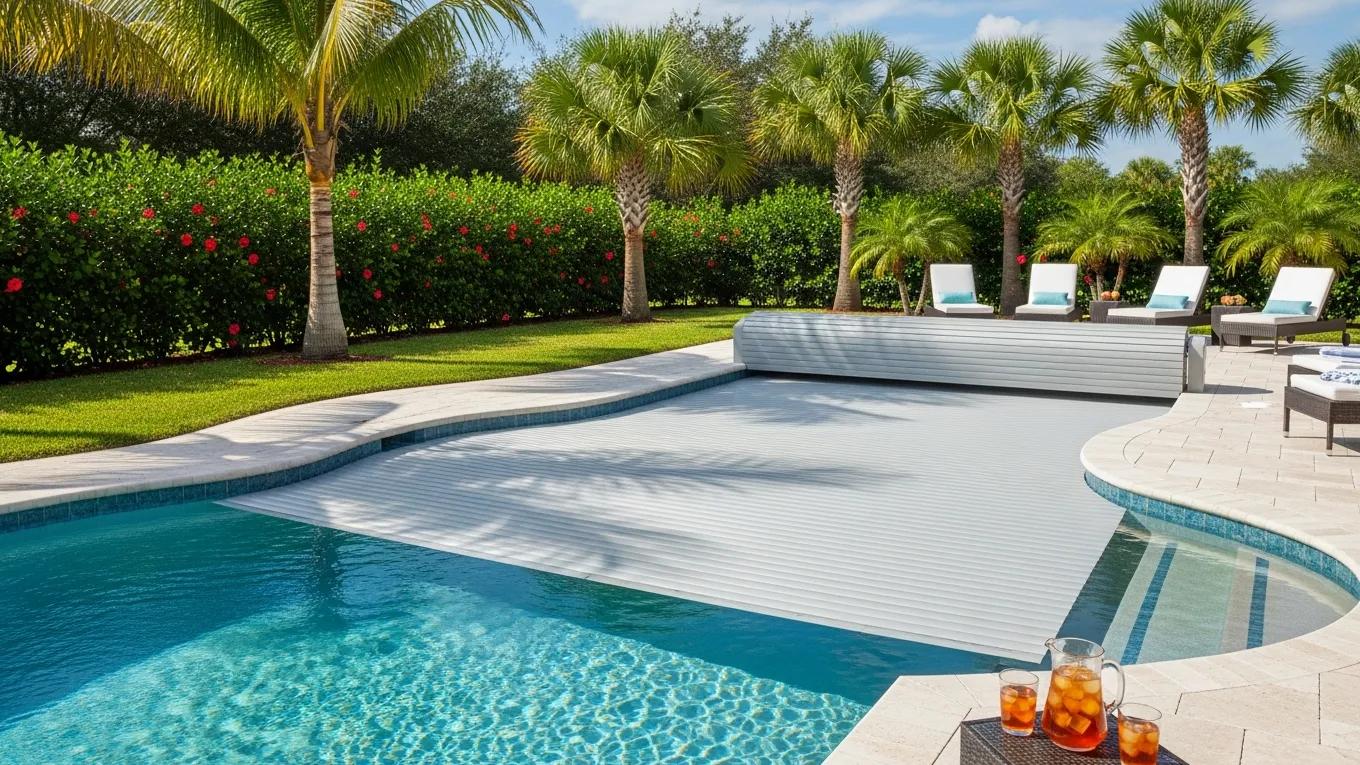
Automatic pool covers are motorized systems that open and close across the pool surface at the push of a button. Beyond convenience, their main role is safety: they block access to the water when the pool isn’t in use, helping keep children, pets, and visitors out of harm’s way. They’re also designed to meet many local safety standards, giving homeowners a reliable, easy-to-use solution for pool protection.
Understanding Automatic Pool Covers as a Safety Feature
These covers act as a physical barrier that prevents accidental entry into the pool — a straightforward but powerful way to reduce risk. Built to be durable and easy to operate, modern systems encourage regular use because covering the pool takes seconds. That consistent use is what makes them a practical safety measure for busy families.
How Automatic Covers Prevent Accidental Drownings and Comply with Florida Regulations
Drowning remains a leading cause of accidental death among young children, so effective barriers matter. In Florida, pool safety rules require protective measures, and automatic covers are an accepted and effective option when installed and used correctly. Choosing a cover that meets applicable codes helps protect your family and keeps your pool compliant with local requirements.
What Are the Key Benefits of Installing Motorized Pool Covers?
Motorized pool covers deliver a mix of safety, convenience, and cost savings. They make pools safer for households with kids or pets, simplify daily pool routines, and reduce heating and water costs — benefits that quickly add up for Florida homeowners.
- Safety Enhancements: A sturdy cover provides a dependable barrier that lowers the chance of accidental drownings.
- Convenience Features: Motorized operation means you can secure or open the pool in seconds, which increases the likelihood you’ll use the cover regularly.
- Energy Efficiency: Covers reduce evaporation and heat loss, helping maintain temperature and cutting heating and chemical costs.
Energy Efficiency and Cost Savings with Automatic Pool Covers
Covers are one of the easiest ways to reduce pool-related energy and water use. When closed, they limit evaporation and retain heat, so your heater runs less and you refill less often. Over time, those savings can offset the initial investment while also shrinking your pool’s environmental footprint.
Manufacturers and researchers have long worked to refine materials, reels, motors, and controls so these systems are more durable, efficient, and straightforward to install.
The goal has been to create a practical, cost-effective system that conserves energy in swimming pools using motorized covers. Key progress includes better cover materials and designs, stronger and longer reels, improved motor components and controls, and full-scale demonstrations of commercially developed systems.
Convenience and Child Safety Advantages of Motorized Systems
Because motorized covers deploy with a switch or remote, securing the pool becomes part of a normal routine rather than a chore. That simplicity increases the odds the cover is used consistently — the single most important factor in keeping children and pets safe around water.
How Do Installation Options Differ Between New Pool Construction and Remodeling?
Installing an automatic cover during new construction is generally simpler than retrofitting one on an existing pool. Each path has trade-offs, and understanding them helps you plan for the best long-term outcome.
Integrating Automatic Pool Covers During New Pool Construction
When planned from the start, covers can be built into the pool’s design for a clean look and optimal function. This lets your builder position reels and hardware discreetly and ensure all components work together seamlessly.
Retrofitting Motorized Covers in Existing Pools: Remodeling Solutions
Adding a motorized cover to an existing pool is often possible, but it can require structural adjustments or additional components. A qualified installer can evaluate your pool and recommend the most effective retrofit approach that balances safety, appearance, and cost.
What Maintenance Practices Ensure Longevity of Automatic Pool Covers?
Routine care keeps a cover operating reliably for years. Simple, regular maintenance prevents small issues from becoming costly repairs and ensures the cover continues to protect your pool and family.
Routine Care and Cleaning Tips for Vinyl and Mesh Covers
Vinyl covers need debris removed and occasional cleaning to prevent staining or mildew. Mesh covers also benefit from regular leaf and dirt removal to keep drainage effective. Follow the manufacturer’s cleaning recommendations and use gentle, pool-safe cleaners to preserve the material.
Troubleshooting Common Issues and Scheduling Professional Maintenance
Mechanical wear, motor issues, or damage to the cover fabric can occur over time. Schedule periodic professional inspections and address repairs promptly to avoid more extensive problems. A service technician can spot issues early and keep the system working safely.
How Much Does Automatic Pool Cover Installation Cost and What Financing Options Are Available?
Installation costs vary by cover type, pool size, and site complexity. Knowing the factors that affect price will help you budget and compare contractor proposals more effectively.
Cost Factors Influencing Automatic Pool Cover Installation in Sarasota
Material choice, pool dimensions, installation access, and added features like remote controls or safety interlocks influence cost in Sarasota and surrounding areas. Get multiple written estimates so you can compare scope and value, not just price.
Available Financing Plans and Lead Capture Opportunities
If the upfront cost is a concern, many installers offer financing or payment plans to spread the expense. Ask contractors about finance options and any promotions — they can make an automatic cover more affordable while still providing the safety benefits you want.
What Are the Latest Florida Pool Safety Regulations Affecting Automatic Pool Covers?
Keeping up with Florida’s pool safety rules is important for both legal compliance and household protection. Regulations evolve, so verify current codes when planning an installation.
Overview of 2025-2026 Florida Pool Safety Codes
The 2025–2026 code revisions reinforce the need for effective safety barriers, and automatic covers are recognized as a compliant option when installed to standards. Review the specific local requirements or consult a professional to ensure your system meets all criteria.
How Compliance Enhances Safety and Market Demand for Automatic Covers
Following safety codes improves protection and also raises homeowner demand for certified cover systems. As awareness grows, many buyers view an automatic cover as a smart safety upgrade that adds value to a property.
For homeowners considering a pool upgrade, pool remodeling is a great time to add modern safety features.
To keep your pool running smoothly year-round, consider scheduled pool maintenance plans.
If you’re planning a new build, new construction lets you integrate an automatic cover cleanly from day one.
Frequently Asked Questions
1. What types of automatic pool covers are available?
The two main styles are solid and mesh. Solid covers — usually vinyl — block debris and reduce evaporation very effectively. Mesh covers let water pass through and are lighter, which eases drainage and handling. Each has trade-offs in maintenance, insulation, and debris protection, so pick the one that fits your climate and priorities.
2. How long does the installation of an automatic pool cover take?
Installation time depends on the system and site conditions. Simple jobs can take a few days, while more complex installs or retrofits may take up to a week. Your installer will give a timeline based on your pool’s specifics.
3. Are automatic pool covers suitable for all pool shapes and sizes?
Yes — covers can be custom-made for rectangular, freeform, oval, and other pool shapes. Some shapes require more specialized hardware or adjustment during installation, so work with an experienced installer who can match a solution to your pool.
4. What are the energy savings associated with using an automatic pool cover?
Automatic covers reduce evaporation and heat loss, helping maintain water temperature and lowering heating and refilling needs. Those savings translate into lower energy and water bills and are especially noticeable in climates like Florida’s.
5. How can I ensure my automatic pool cover operates effectively?
Regular cleaning, checking for wear, and routine mechanical inspections keep a cover working reliably. Follow the manufacturer’s care instructions and schedule professional service at recommended intervals to catch small problems early.
6. What safety features should I look for in an automatic pool cover?
Look for a secure locking system, clear safety certifications or compliance with local codes, and user-friendly controls. Additional features like manual override protection and alarm integration can add layers of safety.
7. Can I install an automatic pool cover myself, or should I hire a professional?
While motivated DIYers might handle some tasks, professional installation is generally recommended. Certified installers ensure the system meets safety standards, operates correctly, and integrates with your pool structure — all important for reliable long-term performance.